Looking Guide
How Sargent Used Lost and Found Edges
A portrait feels alive when every boundary is not equally explained. Sargent used edge hierarchy to control attention.

Not every outline deserves equal attention
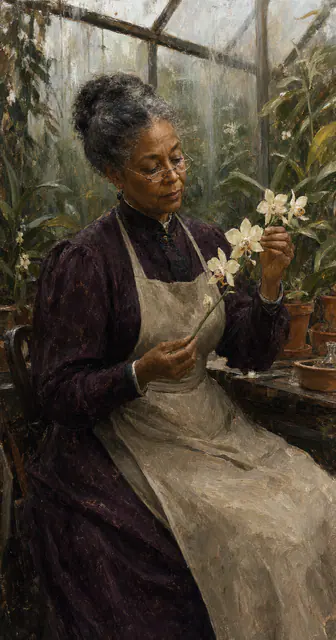
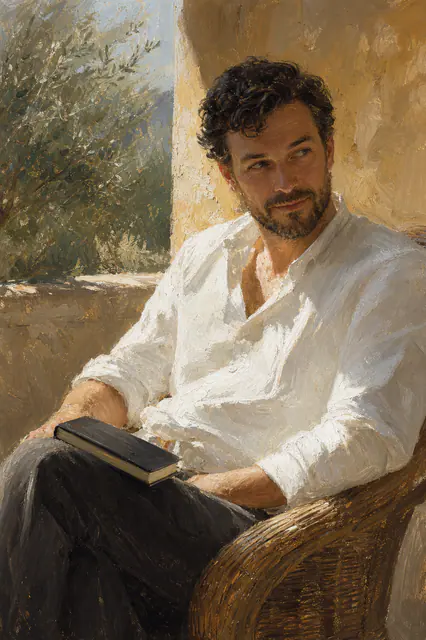
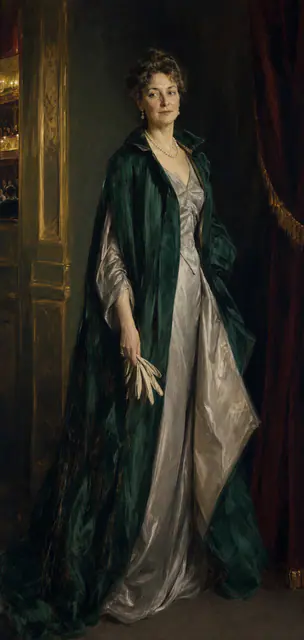
Beginners often separate every object from its neighbour with a continuous boundary. The result may be legible but visually rigid. In observation, edges change. A dark cheek against a light collar can appear crisp; a black sleeve against a dark room may nearly disappear; hair can alternate between sharp strands and broad masses.
Sargent used this variation as a compositional tool. The sharpest boundaries tend to gather around the information he wants read first, while softer or lost edges allow secondary forms to merge with the surrounding atmosphere.
Hard, soft, and lost
A hard edge marks a rapid transition and attracts attention. A soft edge changes gradually, suggesting turning form, distance, or diffused light. A lost edge occurs when neighbouring values become close enough that the boundary temporarily disappears.
These are not fixed labels attached to objects. The same shoulder may begin crisply beside pale skin, soften through a passage of fabric, and vanish into the background. The eye completes what the paint withholds.
Edge hierarchy creates presence
If every feature is equally sharp, a portrait can feel assembled from parts. Edge hierarchy lets the face emerge as one event. A defined eye may sit beside a barely stated temple; the mouth may resolve at one corner and dissolve at the other. This unevenness resembles the way attention actually moves.
Lost edges also bind the sitter to the room. Rather than placing a cut-out figure over a background, Sargent allows clothing and setting to share colour and value. The sitter appears within an atmosphere.
A one-minute looking exercise
Choose a portrait and ignore the subject's identity for one minute. Find the three hardest edges. Then find three places where the figure almost disappears. Trace the path between them. You will often discover that the sequence leads through the face, hands, and a small number of costume accents.
This is one reason a Sargent surface can feel rapid while remaining controlled. The painting does not explain everything. It distributes certainty.