Technique
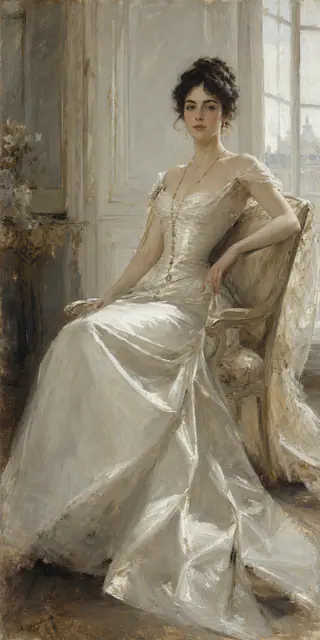
How John Singer Sargent Painted White
White fabric is never only white. Sargent built it from temperature, value, reflected colour, and a few decisive accents.

Begin with value, not a tube of white
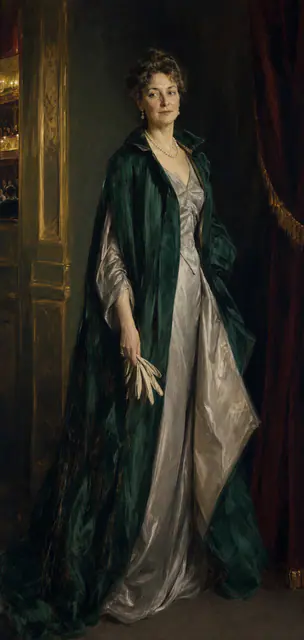
The most convincing white passages in painting are organised before they are decorated. A white dress in shadow may be darker than the sitter's skin in light; a narrow highlight may be the only place where near-pure white appears. Sargent's control begins with this hierarchy. He keeps the largest light mass readable while reserving the brightest notes for places where form turns, satin catches a lamp, or an edge meets darkness.
This is why his white costumes do not flatten into a cut-out shape. The viewer reads the garment as a volume moving through light. Squint at a reproduction and the architecture remains: one large pale mass, several quieter half-tones, and a small number of brilliant events.
Warm light, cool shadow
White is unusually responsive to its surroundings. Candlelight can pull it toward cream and gold; daylight may send its shadows toward blue, violet, or grey-green. Nearby upholstery, skin, and dark clothing contribute reflected colour. Sargent used these shifts to make white feel luminous without painting every fold.
The useful question is not “what colour is this dress?” but “what colours are acting on this dress?” Once that relationship is visible, the fabric belongs to the room rather than floating above it.
Describe the material with the stroke
Different whites demand different marks. A loaded, continuous stroke can suggest the clean turn of satin. A broken dry passage can describe lace or a feathered edge. Thin translucent paint lets a darker preparation breathe through muslin. The brush does more than fill a shape: its speed, thickness, and direction become evidence about the material.
Sargent's celebrated economy comes from asking one mark to perform several jobs at once. A stroke may turn the form, sharpen a silhouette, change temperature, and indicate sheen. Adding more marks would not necessarily add more information.
Try this in the gallery
In The Sargent Atelier, move backward until the small folds disappear. Identify the largest light shape first. Then step closer and find the few accents that make the fabric feel expensive, heavy, or airborne. Notice how much of the garment is implied rather than fully described.
The exercise is not about copying Sargent's handwriting. It is about recognising his order of decisions: structure first, temperature second, material last, and emphasis only where the eye needs it.